The Fastest-Growing Career in Financial Crime Has Almost No Competition
The demand for Crypto Investigation & Blockchain Forensics professionals is MASSIVE. The supply is almost ZERO. c4 changes that — starting with you.
The World's Fastest-Growing Crime Has a Huge Investigator Shortage
Money laundering. Darknet markets. Human trafficking. Sanctions evasion. Terrorism financing. Financial crime. Cryptocurrencies now sit at the centre of the world's most serious crimes.
Most investigators, compliance officers & legal professionals lack the training, tools & frameworks to effectively detect, trace & prosecute crypto crime. Cases stall. Criminals walk. Assets disappear.
That's the problem c4 was built to solve — and right now, the professionals who get trained first will define this field.
Everything You Need to Minimize Crypto Crime — In One Place
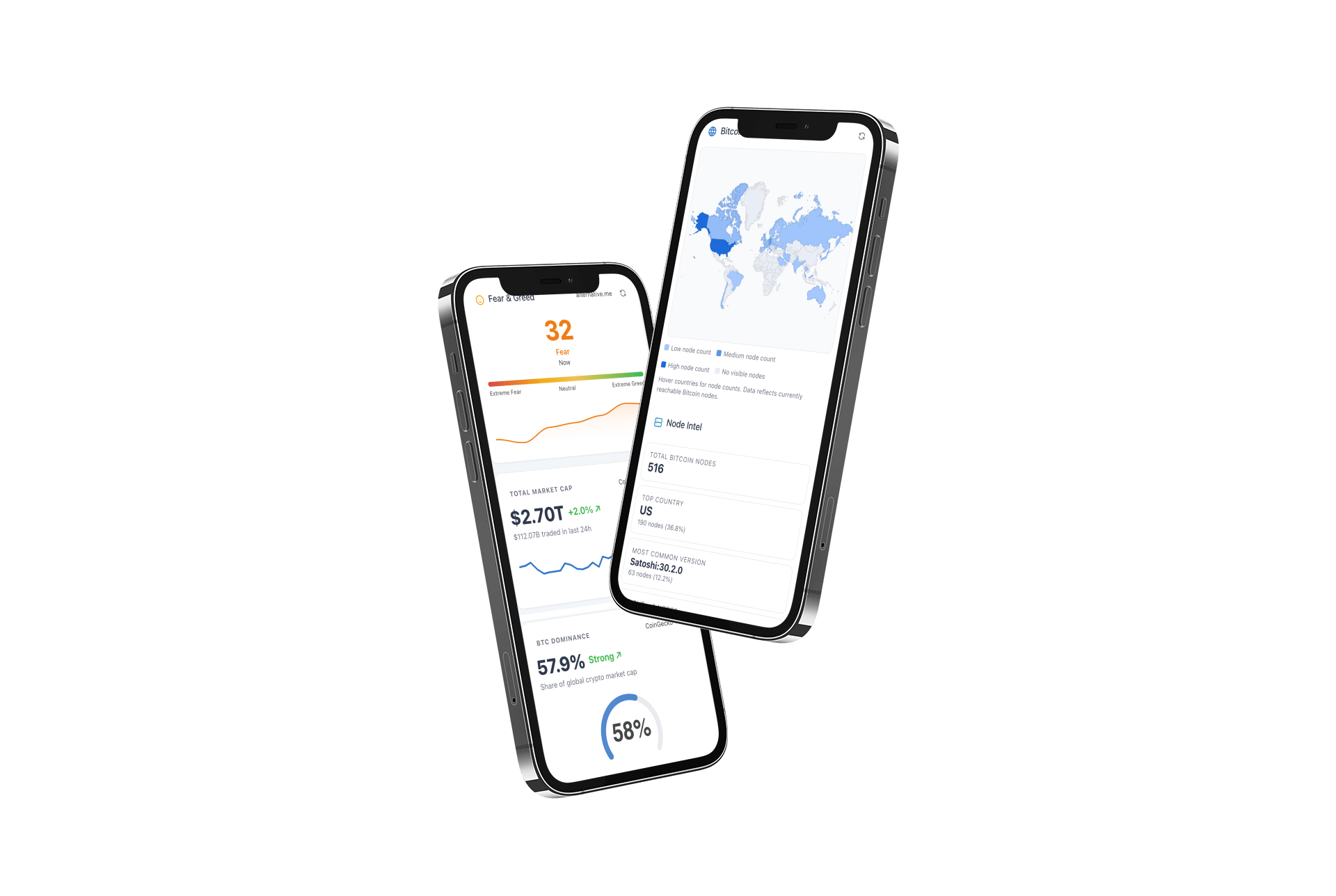
Most professionals piece together generic tools, outdated training, and vendor-locked platforms. c4 is different — 114 live investigation tools, 5 specialist certifications, and 6 field-tested Manuals, all built around real investigative workflows.
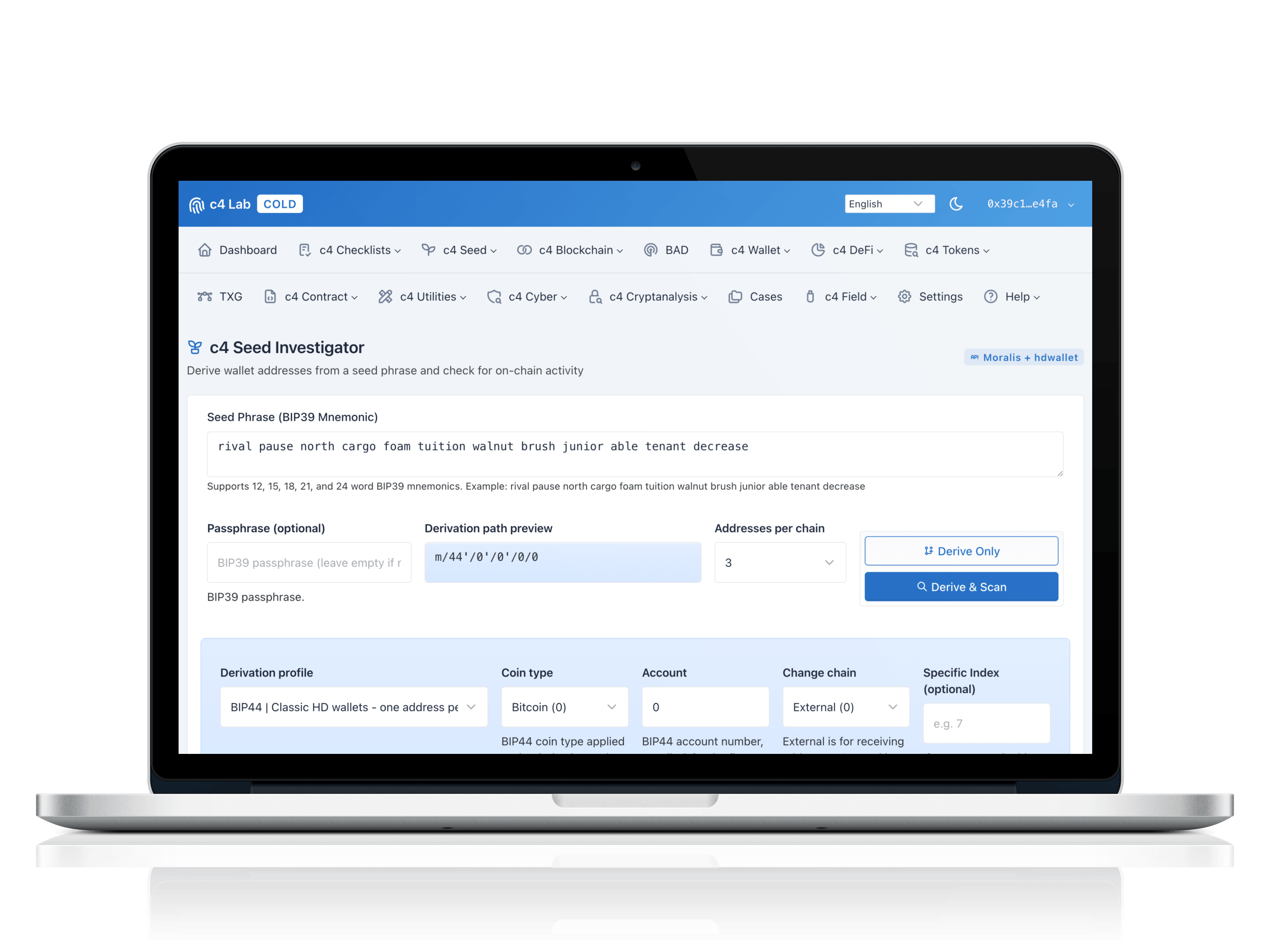
114 purpose-built tools across 14 modules — covering seed phrase recovery & investigation, wallet forensics, blockchain tracing, DeFi analysis, smart contract inspection, cyber attribution, transaction graph visualisation, cryptanalysis, and field evidence ingestion.
Unlike generic blockchain analytics platforms, c4 Lab is built for investigators: every tool is designed around real investigative tasks.
Five certifications built for different roles and levels: CCI for focused blockchain tracing skills, CCA for the full investigative spectrum, CMLA for compliance and AML teams, a free hands-on wallet-building course, and a Certified Trainer program for those who want to teach.
c4 courses are built around the Cryptocurrency Investigation & Forensics Manual and delivered with live expert lectures, videos, case studies, live cryptocurrencies, authentic court records, and interactive learning quizzes.
Six volumes covering wallet forensics, technical investigation foundations, blockchain & DeFi analysis, covert digital infrastructure, crime scene first response, and global enforcement frameworks.
Written by Rohas Nagpal, it is the backbone of every c4 certification — a practitioner's reference designed to support investigations that need to hold up in court, not a product manual tied to any one vendor's platform.
Rohas Nagpal is an author, lawyer, and investigator with 25+ years of experience across 18 countries — specialising in cybercrime, digital forensics, cryptocurrency investigation, and blockchain forensics.
Santosh Khadsare is an Army veteran, former Scientist with the Government of India, with over 25 years of experience in digital forensics and incident response.
Shinam Arora is a computer science engineer with 15+ years of experience in blockchain systems and digital evidence analysis.
Certification Programs
Be Among the First Certified in Cryptocurrency Crime Investigation, Compliance & Forensics
The field is new. The demand is massive. The time to establish yourself as an expert is right now.
c4 Lab
114 Investigation Tools Built for Investigators
Unlike generic blockchain analytics platforms, every tool in c4 Lab is designed around real investigative tasks.
c4 AI
Your AI Investigation Partner — Built on the Deepest Crypto Forensics Knowledge Base in the Field
Describe your case, your artifact, or your next investigative question — and c4 AI tells you exactly what to do and how to do it.
No generic answers. No hallucinated blockchain data. Just structured, operationally grounded guidance drawn from the deepest cryptocurrency forensics knowledge base in the field.
Built for investigators under pressure, compliance teams building defensible workflows, and forensics analysts working complex multi-hop traces.
Available only to c4 students.
The Manual
The Investigative Framework Every c4 Certification Is Built On
6 volumes covering Wallet Forensics, Technical Foundations, Blockchain & Crypto Investigation, Covert Digital Infrastructure Investigation, Crime Scene First Response, and Global Enforcement. Written for practitioners. Designed to hold up in court.
c4 Global Conference
c4 Global Conference on Cryptocurrency Crimes, 2026
Wednesday, 28 October 2026
The c4 Global Conference on Cryptocurrency Crimes 2026, is a first-of-its-kind online event bringing together investigators, regulators, legal professionals, blockchain analysts, compliance officers, and researchers from across the globe to tackle the fastest-growing frontier in financial crime.
Practitioner-led sessions. Real cases. Real enforcement challenges. If you're serious about fighting crypto crime, this is where the field meets.
Request Free Pass → Apply to Speak →Who We Serve
Whatever your role — if crypto crime touches your work, c4 is built for you
Cryptocurrency crime doesn't respect professional boundaries. It lands on investigators, compliance teams, lawyers, regulators, and technologists alike. c4 gives each of them exactly what they need to act with authority.

Help Build the Global Crypto Investigation Ecosystem — and Get Paid for It
The field is new. The need is urgent. c4 is building a structured global partner network — and there's a role for professionals at every level. Whether you advise students, deliver training, run a training center, or conduct investigations, join now while the ecosystem is being built.
Guide learners into cryptocurrency investigation careers. Earn a commission for every successful admission. No infrastructure required.
Deliver c4 courses to government, private sector, and academic audiences. Requires formal trainer certification by c4 Academy.
Deliver c4 programs at scale across your region. Access c4's curriculum, brand, certification framework, and expert network.
Apply your expertise to real cases: law enforcement support, corporate investigations, AML probes, and expert consultations.